
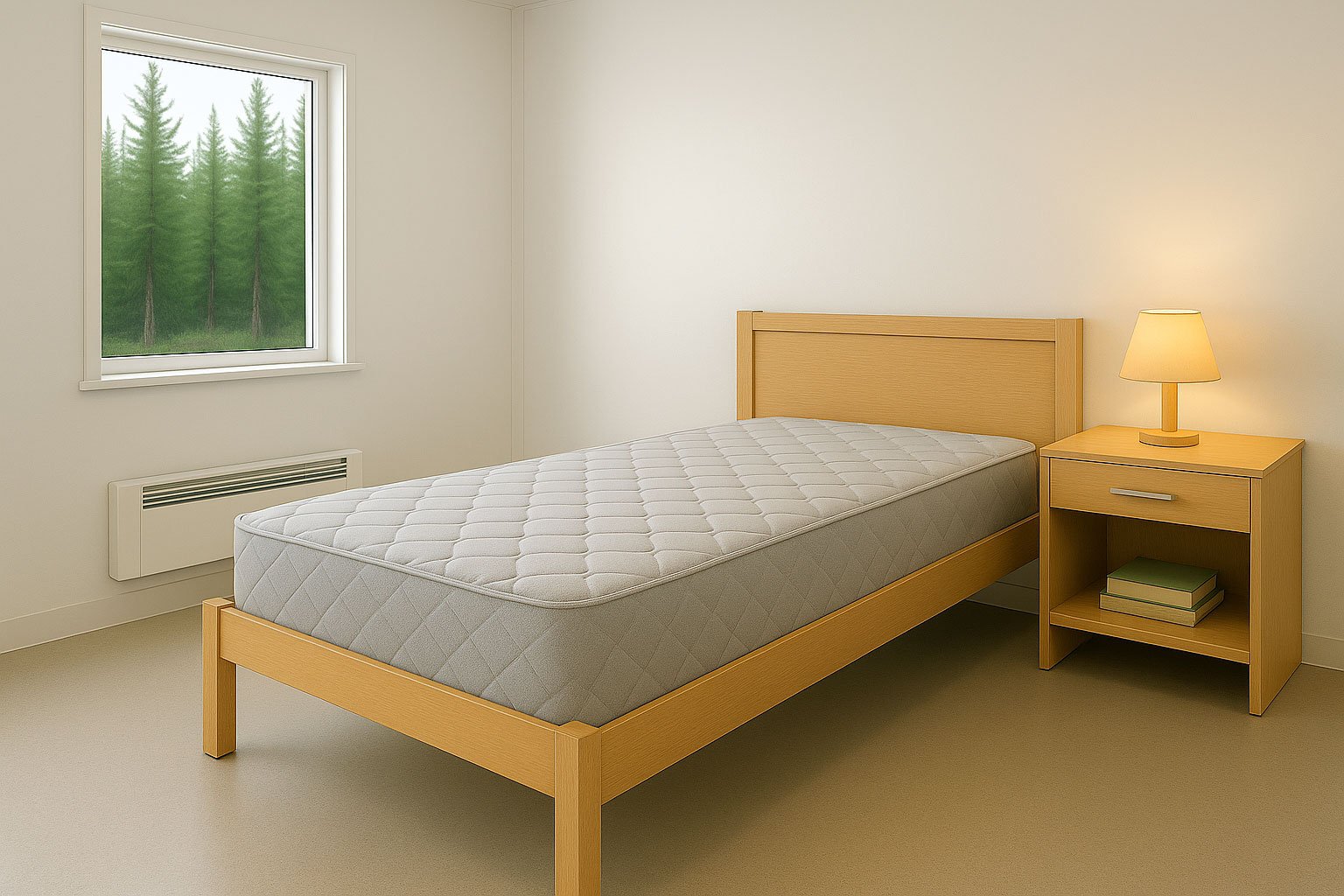
Remote work camps place unique demands on every piece of infrastructure — and mattresses are no exception. From mining and energy camps to forestry, construction, and seasonal workforce housing, camp mattresses must withstand heavy use, frequent turnover, tight logistics, and strict safety requirements — all without blowing budgets or creating operational headaches.
At Sleep Boutique, we manufacture remote work camp mattresses in Canada, purpose-built for high-use environments where durability, hygiene, and cost control matter more than showroom aesthetics. This guide explains what makes a great camp mattress, common mistakes to avoid, and how choosing the right construction can reduce long-term costs across your sites.
Why Residential Mattresses Fail in Remote Work Camps
Many camps start with residential or hospitality mattresses — and quickly discover the downside.
Common issues include:
- Premature sagging and breakdown
- Covers tearing or absorbing spills and moisture
- Difficulty sanitizing between occupants
- Inconsistent sizing for bunks and bed frames
- High replacement frequency and waste
Remote work camps demand commercial-grade mattresses designed for rotation schedules, rough handling, and environments where replacement logistics are expensive and disruptive.
What Defines a True Remote Work Camp Mattress?
A proper camp mattress is engineered around longevity, hygiene, and operational efficiency, not retail comfort trends.
1. Built for High-Turnover Use
Camp mattresses must hold their shape and support through:
- Continuous rotations
- Multiple body types
- Long shifts and extended stays
Durable foam blends and pocket-coil constructions are favored because they maintain support longer than low-density residential foams.
2. Easy-to-Clean, Hygienic Covers
Hygiene is critical in shared accommodations.
Common camp mattress cover options include:
- Heavy-duty polyester damask (breathable and durable)
- Nylon or vinyl covers for wipe-clean sanitation
- Darker fabrics that hide wear and staining
Proper covers reduce odors, prevent moisture absorption, and speed up room turnover between occupants.
Institutional Mattresses page https://sleepboutique.ca/mattresses/institutional-mattresses/
3. Fire Safety & Compliance Awareness
Remote camps often operate under:
- Corporate safety standards
- Provincial or site-specific fire guidelines
- Insurance and risk management requirements
Sleep Boutique designs mattresses that can be specified to meet commercial fire performance expectations, helping operators stay compliant without over-engineering or unnecessary cost.
4. Logistics-Friendly Construction
Remote sites amplify logistics challenges:
- Limited access windows
- High freight costs
- Difficult replacements
Choosing standardized, durable mattresses reduces emergency replacements and helps operations teams plan shipments efficiently — especially when servicing multiple camps.
Foam vs Pocket Coil: What Works Best for Camps?
Foam Camp Mattresses
Best for:
- High-turnover camps
- Budget-controlled projects
- Lightweight logistics
Advantages:
- Simple construction
- Consistent firmness
- Lower upfront cost
- Easy handling
Pocket Coil Camp Mattresses
Best for:
- Longer rotations
- Permanent or semi-permanent camps
- Higher comfort expectations
Advantages:
- Improved airflow
- Better weight distribution
- Longer usable lifespan
- Strong edge support for bunk systems
Sleep Boutique manufactures both options — allowing camps to standardize across different site needs without changing suppliers.
Custom Sizing for Bunks & Camp Beds
One of the most overlooked issues in remote camps is non-standard bed sizing.
Many camps use:
- Narrow bunks
- Short or extended lengths
- Custom steel bed frames
A mattress that doesn’t fit properly leads to:
- Safety issues
- Premature wear
- Complaints from occupants
As a manufacturer, Sleep Boutique builds custom-size camp mattresses to match your exact frames — eliminating costly workarounds on site.
Who Uses Remote Work Camp Mattresses?
Remote camp mattresses are commonly used in:
🏗️ Mining & energy camps
🌲 Forestry and logging operations
🛢️ Oil & gas workforce housing
🏕️ Seasonal labor camps
🏗️ Infrastructure & construction projects
🧭 Exploration and fly-in/fly-out sites
Each environment has different priorities — and a one-size-fits-all mattress rarely works.
Why Work Directly with a Manufacturer?
- Consistent specs across sites
- Better control over costs
- Custom builds without retail markups
- Reliable lead times
- Simplified reordering
Sleep Boutique manufactures in Canada and works directly with operations, procurement, and facilities teams — not just resellers.
Long-Term Cost: Why Cheaper Isn’t Always Better
A mattress that costs less upfront but fails early creates hidden costs:
- Increased replacement frequency
- Emergency freight
- Labor time for swaps
- Disposal costs
- Occupant dissatisfaction
A properly specified camp mattress often delivers lower total cost of ownership over the life of a project.
Choosing the Right Camp Mattress: Key Questions to Ask
Before ordering, ask:
- How long are typical rotations?
- What cleaning protocols are required?
- Are bed frames standard or custom?
- Is fire performance required?
- How difficult is site access for replacements?
Answering these upfront ensures the mattress is built for your reality — not a showroom floor.
Remote Work Camp Mattresses, Built for Real Conditions
At Sleep Boutique, we don’t design mattresses for marketing photos — we build them for real-world use in remote environments.
- ✔ Made in Canada
- ✔ Durable foam or pocket coil options
- ✔ Custom sizes for bunk systems
- ✔ Covers designed for hygiene & longevity
- ✔ Factory-direct pricing for volume orders
If you’re planning a new camp, expanding an existing site, or replacing aging mattresses, we can help you specify the right solution.
👉 Learn more about our Remote Work Camp Mattress options or request pricing today.